Vespertine · Orbital Resilience
Self-healing systems for the orbital economy.
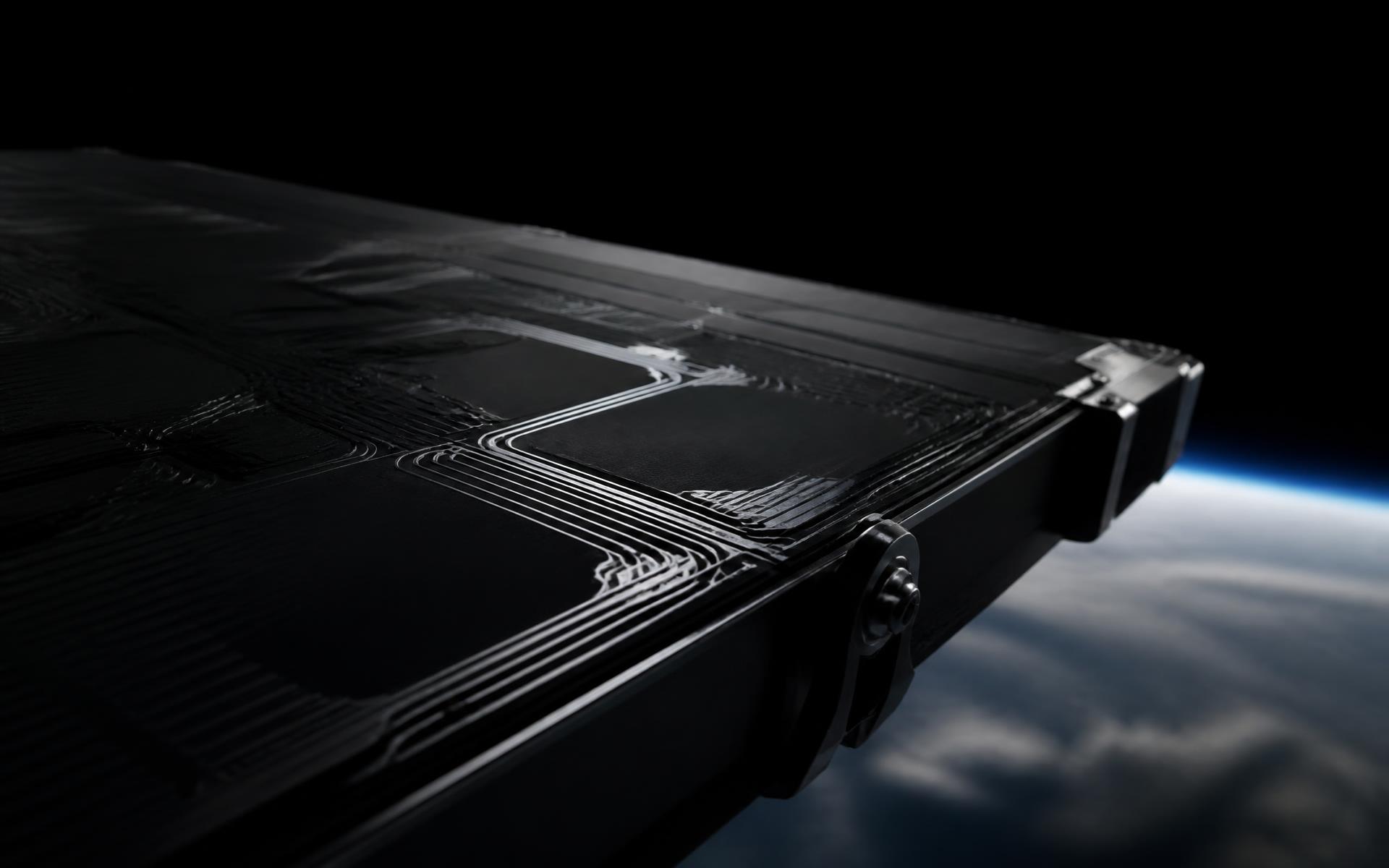
MIRRH is a biomimetic hardware layer designed to detect, clot and permanently seal debris damage in satellite panels — turning the most fragile surface on a spacecraft from a liability into a long-life asset.
The Problem
A gram of debris ends a $200M mission.
Micrometeoroids and orbital fragments strike constantly. A single hypervelocity puncture through a radiator or solar panel can sever a power run, vent a loop, and take an otherwise healthy spacecraft to scrap years ahead of schedule.
The industry's answer today is mass: heavier shielding, duplicated strings, and priced-in risk. Redundancy consumes budget and launch mass, and it still only delays the failure. Nothing on orbit repairs itself.
~1M
trackable debris objects >1 cm in orbit
7 km/s
typical closing velocity of an impact
0
panels in service that can heal themselves
The Solution — MIRRH
Material Integrity & Resilient Recovery Hardware.
MIRRH is designed as a biomimetic architecture that borrows from biology: a nervous system that senses injury, a circulatory system that carries the repair agent, and a clotting response that closes the wound permanently. The goal is a panel that recovers instead of failing.
01 — Nervous system
The architecture uses a distributed sensing grid across the panel to continuously monitor conductive traces. A breach is designed to register as a resistance discontinuity, localising the puncture to the affected cell within milliseconds.
02 — Circulatory system
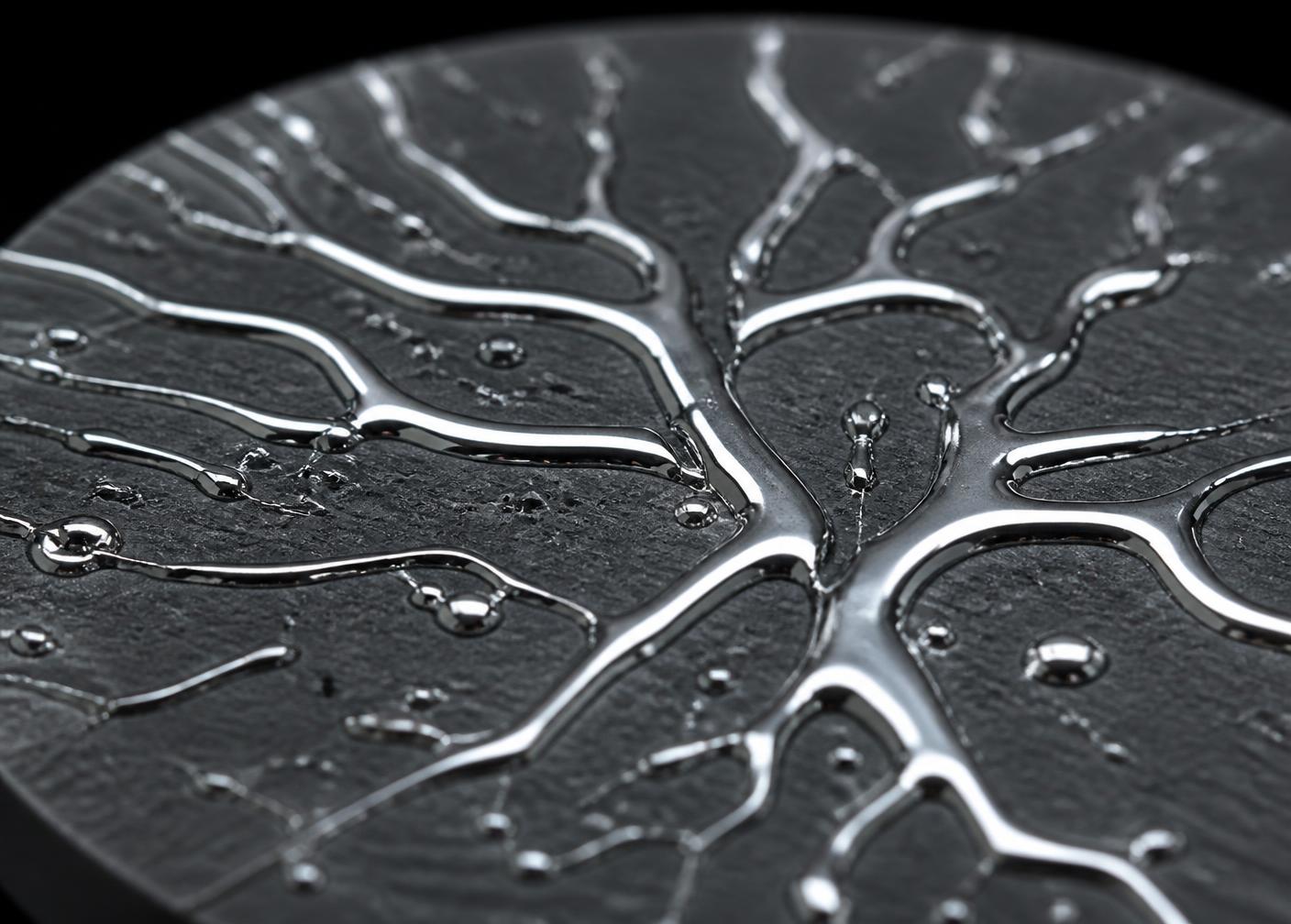
A lattice of sealed microchannels is designed to carry eutectic Gallium-Indium (EGaIn) liquid metal under low pressure. Actuation is local: only the channels serving the damaged cell are opened.
03 — Healing response
EGaIn-infused epoxy is designed to be pumped into the void and form a conductive clot that restores continuity. Controlled surface oxidation then grows a gallium-oxide skin over the clot — the intended permanent, vacuum-stable seal.
Target
seconds from detect to sealed
Permanent
oxide-skin seal (design goal)
Why Now
Megaconstellations
Orbital density is compounding. Every launch raises the collision probability for every asset already up there, and insurers are repricing accordingly.
In-space servicing
Refuelling and servicing operators — Orbit Fab, Starfish Space and peers — are extending mission life. Longer missions make structural durability the binding constraint.
Domestic gallium
U.S. gallium production coming online at Sheep Creek, Montana in 2026/27 secures a compliant supply chain for a material currently dominated by foreign export controls.
Market & Business Model
A premium upgrade, priced against the asset it protects.
MIRRH is sold to primes and satellite manufacturers as an integrated panel upgrade: non-recurring engineering for qualification and integration, followed by a per-unit royalty on every panel shipped.
The beachhead is high-value GEO, where single spacecraft carry nine-figure insured value and fifteen-year design lives — the cases where avoided loss dwarfs the cost of the upgrade. From there: defense assets, servicing platforms, and eventually volume LEO.
Vision
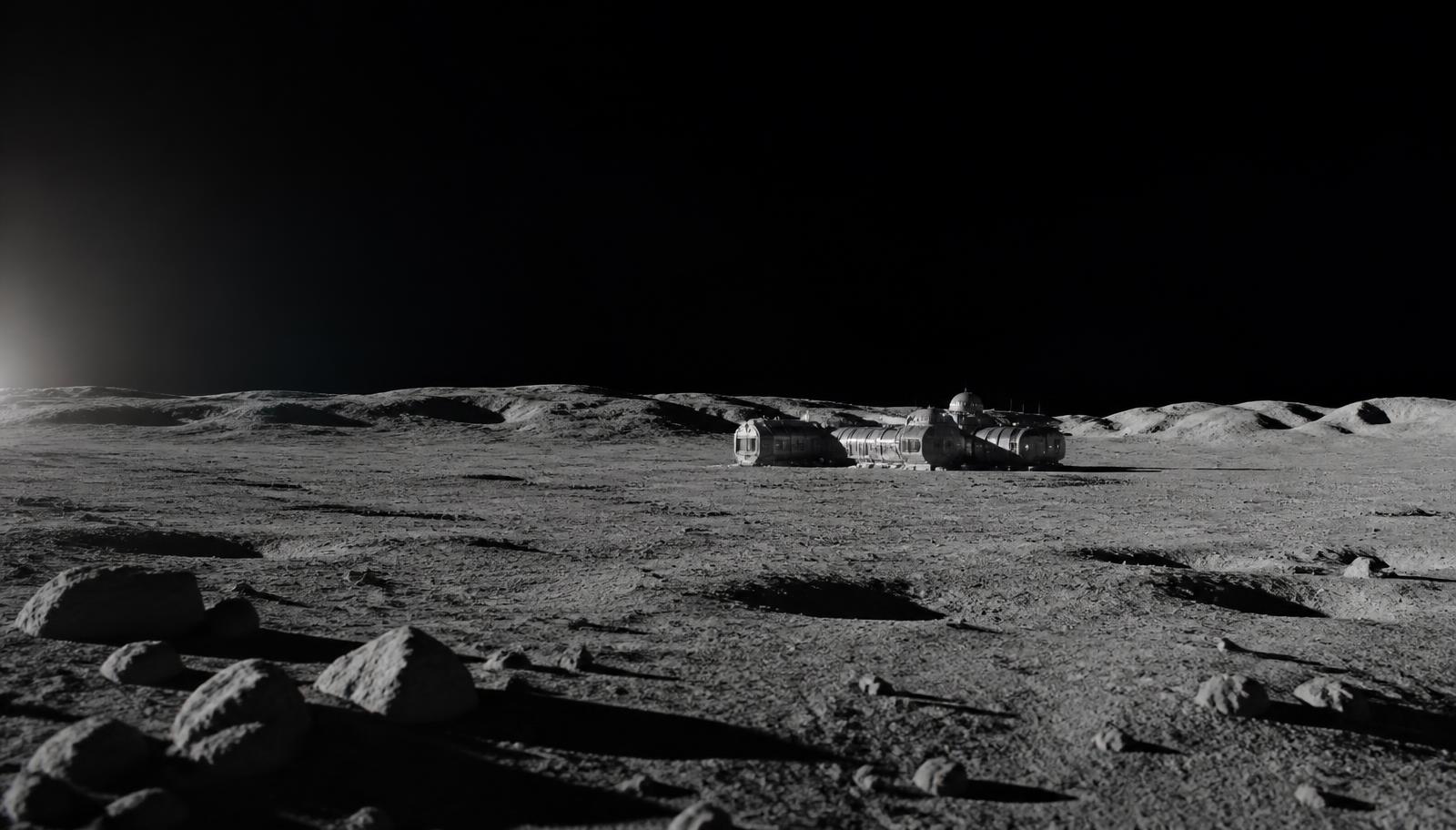
Orbit is the proving ground. The same architecture that closes a puncture in a satellite panel — sense, circulate, clot, seal — is what a pressurised habitat on the Moon will need when resupply is measured in months and there is no one to send outside with a patch kit. Structures that repair themselves are the precondition for staying.
Founder
Alex Smith
Founder
A background spanning academic research and quantitative finance, focused on translating complex materials science into commercially viable space hardware — and on pricing the risk it removes.
Currently pursuing non-dilutive SBIR funding and building the founding team: a Lead Materials Engineer and a Head of Business Development / COO. Raising a $1.5M seed round to carry MIRRH through qualification.
Contact
Request a technical briefing.
For manufacturers, servicing operators, agency programs and investors. We share architecture detail, test roadmap and integration requirements under NDA.
alex@vespertine.io